Speak in any room, or type.
It is one conversation.


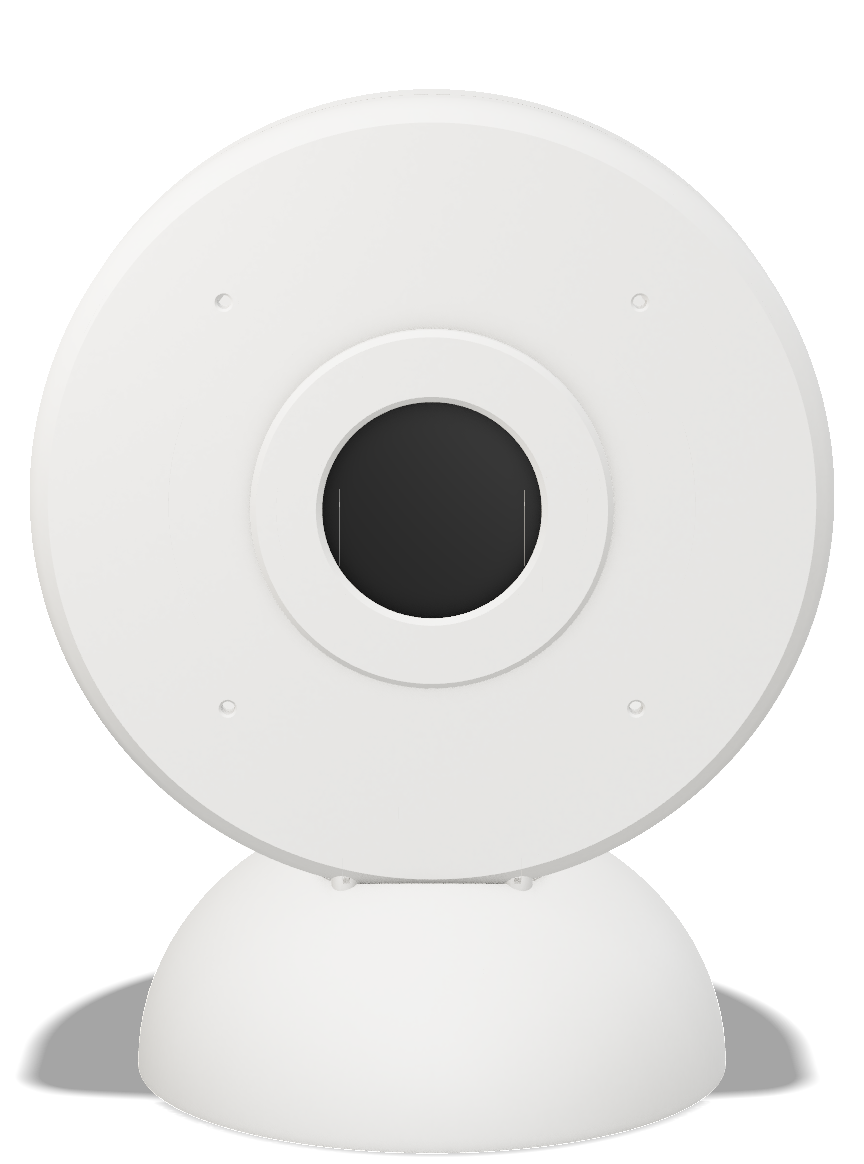
Voice
A voice satellite in each room hears its wake word and speaks the answer. A satellite is also a speaker for your music system, and lowers the music while you talk to it.
Open source: firmware on a reSpeaker XVF3800 with a Seeed XIAO ESP32-S3, echo cancellation (AEC) on the XVF3800, an open 3D-printed case. Built to support other boards.
Text
What you say is kept as text, so the same conversation opens in the chat in your browser, where you carry it on by typing. Text works without the voice components too.
Your hardware, your data.
Only two things leave your installation: what the agents send to the language model of the supplier you choose, and what the MCP connectors send to the MCP servers you connect outside your installation. Speech recognition and speech synthesis run inside your installation.
The server
The brain and the web client of your household run on your own machine: any x86-64 machine that runs containers, such as a mini-PC or a NAS.
The satellites
Open source firmware and an open, 3D-printed case. Today on a reSpeaker XVF3800 with a Seeed XIAO ESP32-S3, built to support other boards.
- reSpeaker XVF3800
- Seeed XIAO ESP32-S3
- ESP32-S3
Your own agents, from MCP servers.
You create an agent by connecting an MCP server in the configuration, without changing code: one reachable over Streamable HTTP, with no authentication or a bearer token. For each request, the orchestrator agent chooses the agent that answers it, and that agent uses the tools of its server.
For example, connect one of these services, then ask:
Home Assistant
Home
“turn off the garden lights”
- Music Assistant
Music Assistant
Music
“play some jazz in the kitchen”
- OpenCloud
OpenCloud
Documents and files
“find the boiler’s warranty”
Immich
Photos
“how many photos did we take in Rome?”
Nextcloud
Calendar, documents and files
“what’s on Saturday?”
- Radicale
Radicale
Calendar
“what’s on Saturday?”
- Baïkal
Baïkal
Calendar
“what’s on Saturday?”
Memos
Notes
“note that the boiler was serviced today”
TriliumNext
Notes
“note that the boiler was serviced today”
Joplin
Notes
“note that the boiler was serviced today”
Todoist
To-do
“add ‘call the plumber’ to my list”
Mealie
Recipes and shopping list
“find the lasagne recipe”
Grocy
Shopping list
“add milk to the shopping list”
openGym
Training
“log today’s workout”
- wger
wger
Training
“log today’s workout”
Paperless-ngx
Documents and files
“find the boiler’s warranty”
Jellyfin
Music, films and series
“find the latest films in the library”
Actual Budget
Household budget
“how much did we spend on groceries this month?”
Firefly III
Household budget
“how much did we spend on groceries this month?”
Any other MCP server
or one of your own
“anything its tools can do”



Ambrogio brings one connector of its own: the memory of the household's conversations.
Install it on your own hardware.
Two commands with Docker Compose on a machine of your homelab.
Every release is published as verified container images, and you configure it without changing code. A voice satellite takes the published firmware, set up from the browser.
In the installation example of the repository:
cp .env.example .env    # set your values
docker compose up -d- MIT licensed, free
- No account to create
- Speech runs on your machine
Questions
What people ask before they install it.
Is there a service to sign up for?
No. Ambrogio runs only on your own hardware. Its agents use a language model of the supplier you choose, which may ask for an account of its own.
Does the household's voice leave the house?
No. Speech recognition and speech synthesis run inside your installation. Only two things leave it: what the agents send to the language model of the supplier you choose, and what the MCP connectors send to the MCP servers you connect outside your installation.
Which services can it reach?
A service whose MCP server you connect over Streamable HTTP, with no authentication or a bearer token, such as Home Assistant, Immich or Paperless-ngx, or a server of your own. A server that speaks only over standard input and output needs a bridge that exposes it over HTTP. You configure each connection yourself; Ambrogio comes with one connector of its own, its memory.
Does each person have an account?
Not in the current release. The household shares one identity, one list of conversations and one memory.
Do I need a voice satellite?
No. Text works without the voice components. When voice is enabled in your installation, you place a satellite in each room where you want to speak to it.
What does it cost?
Ambrogio is open source under the MIT License. The language model supplier you choose may charge for its use.
Ambrogio is young, self-hosted software. Expect rough edges while it grows.